An interdisciplinary collaboration reached Nature!
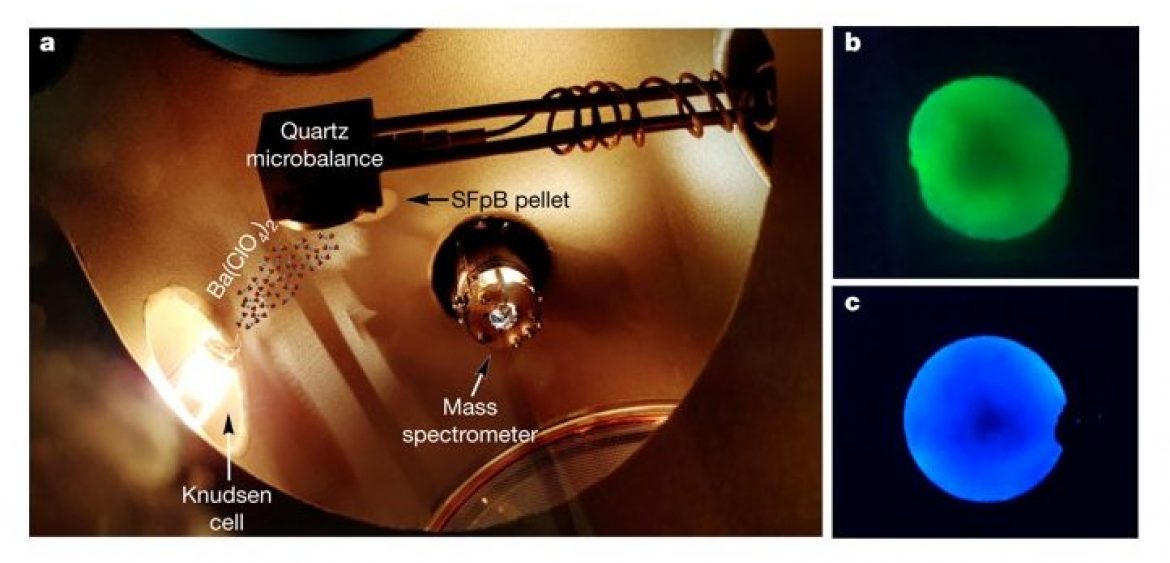
Abstract. Observation of the neutrinoless double β decay is the only practical way to establish that neutrinos are their own antiparticles1. Because of the small masses of neutrinos, the lifetime of neutrinoless double β decay is expected to be at least ten orders of magnitude greater than the typical lifetimes of natural radioactive chains, which can mimic the experimental signature of neutrinoless double β decay2. The most robust identification of neutrinoless double β decay requires the definition of a signature signal—such as the observation of the daughter atom in the decay—that cannot be generated by radioactive backgrounds, as well as excellent energy resolution. In particular, the neutrinoless double β decay of 136Xe could be established by detecting the daughter atom, 136Ba2+, in its doubly ionized state3–8. Here we demonstrate an important step towards a ‘barium-tagging’ experiment, which identifies double β decay through the detection of a single Ba2+ ion. We propose a fluorescent bicolour indicator as the core of a sensor that can detect single Ba2+ ions in a high-pressure xenon gas detector. In a sensor made of a monolayer of such indicators, the Ba2+ dication would be captured by one of the molecules and generate a Ba2+-coordinated species with distinct photophysical properties. The presence of such a single Ba2+-coordinated indicator would be revealed by its response to repeated interrogation with a laser system, enabling the development of a sensor able to detect single Ba2+ ions in high-pressure xenon gas detectors for barium-tagging experiments.
To access this publication click here.
For some press-notes on this publication click the following links: